Purpose
This webpage is meant to educate users on the rapidly increasing amount of waste within the fashion industry. Using several data sets, we will go over changes and patterns within recent years. Users can see the estimated growth of carbon emissions caused by fashion waste and reflect on the overconsumption of our society. Based on recent trends, we will explore other alternatives such as second-hand apparel.
Green Match: Is Fast Fashion Bad for the Environment?

Green Match is an online service that helps homeowners choose the best installer for solar panels, heat pumps, boilers, double glazing, and more. In this guide they analyze the leading fast fashion brands, estimated growth of fashion emissions, and the growing mark of second-hand apparel.
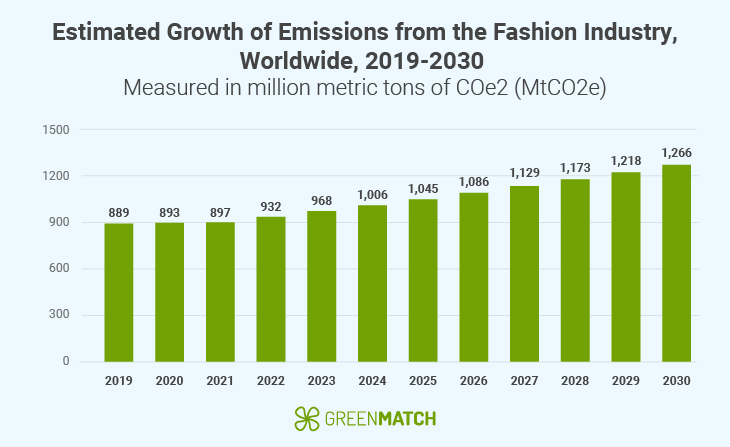
The graph on the right shows a continious increase in carbon emissions. It is predicted that the fashion industry could eventually account for more than 26% of the world's carbon emissions. Companies can use this data to understand the important of limiting waste. Individuals might be prompted to avoid leading fast fashion brands and explore other alternatives.
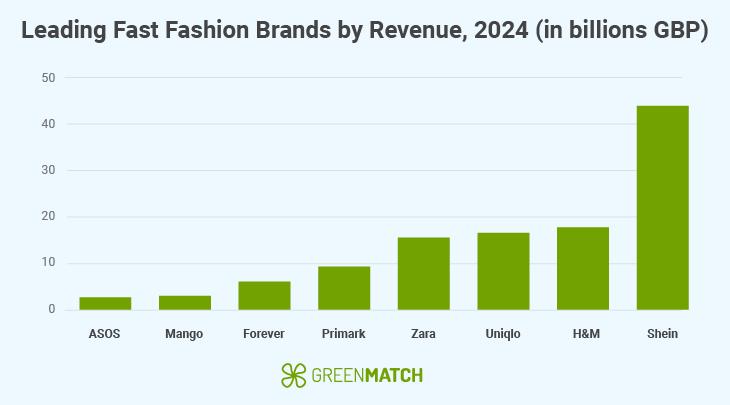
According to Green Match, Shein is the leading fast fashion brand with a GBP almost twice the amount as the second leading fast fashion brand. Based on this information, users who want to avoid contributing to fashion waste might avoid these listed companies. We can use this information to explore other brands and fast fashion alternatives.
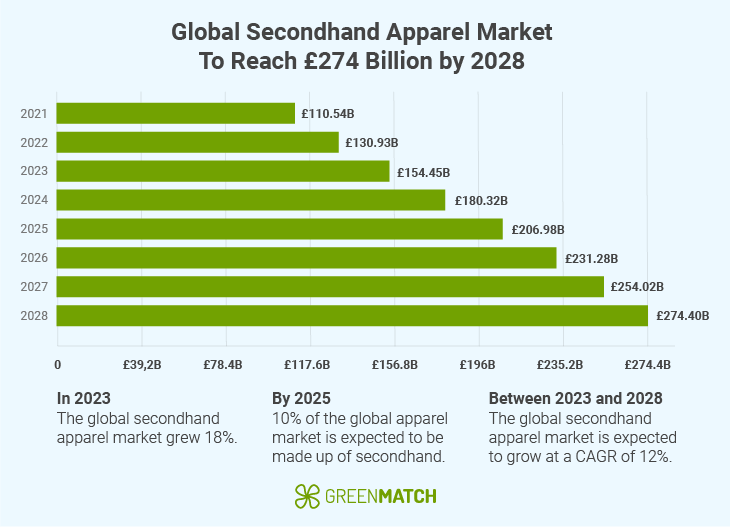
That brings us to other alternatives such as second-hand apparel. Based on the global market, second-hand apparel will continue to rise in popularity. By 2028, the market with be double the value it was in 2021. Fashion business can use this data to decide if switching from fast fashion to second-hand might be a better choice. This can give insight into the future of the fashion industry and what trends businesses should follow.
Uniform Market: Environmental Impact of Fast Fashion Statistics (2026)

In this article, Uniform Market explores the environmental impact of fast fashion and its increasing market size.
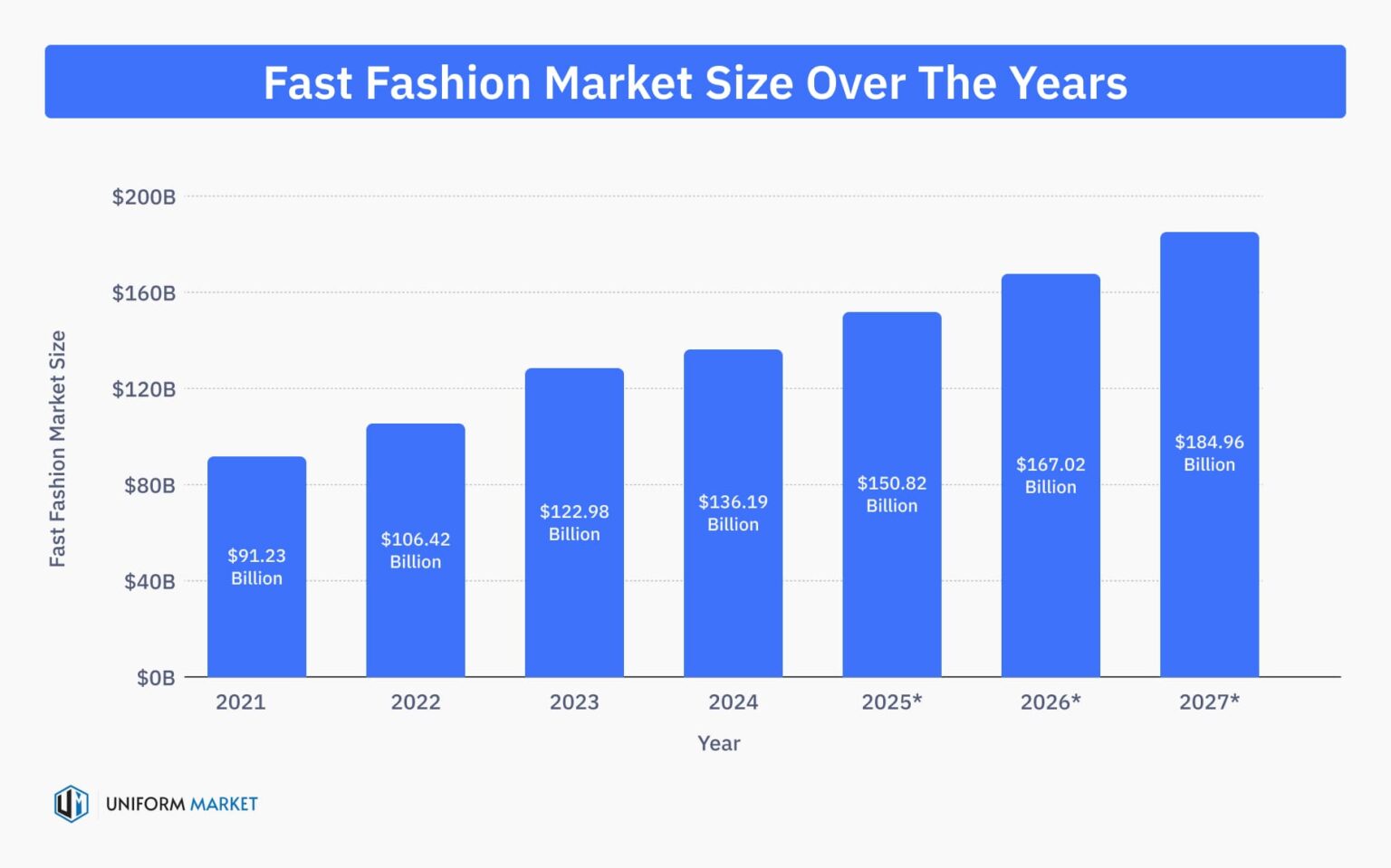
The fast fashion market is now worth over $160 billion with an estimated value of $184.96 billion in 2027. Although Green Match's data shows an increase in the second-hand market, fast fashion continues to grow. Using Uniform Market's data, consumers can become more conscious of their shopping habits. Environmentalist can use this data to identify other harms to our environment and research what other industries have high carbon emissions.
U.S. Government Accountability Office: Fast Fashion- Great for Your Wallet, Costly for the Planet

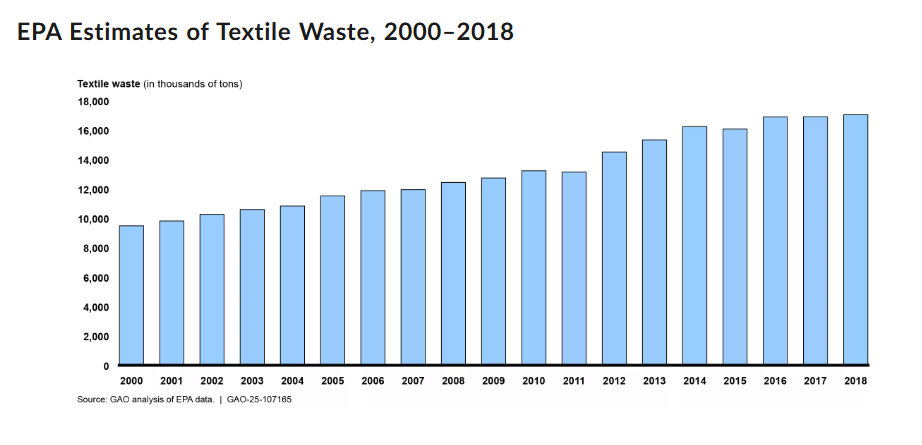
According to the EPA, more than half of discared textiles will end up in the landfill. These textiles can release methane and gases that contain PFAS which can pollute drinking water. It is also worth noting that 60% of textiles have microplastics. GAO's analysis of textile waste shows that it has been continously increasing since 2000. Using this data, consumers might try to reduce their textile waste in order to protect the environment. Due to the urgency of this matter, business might use this data to push for slow-fashion business concepts.
Precedence Research: Textile Waste Management Market Size, Share and Trends 2026 to 2035

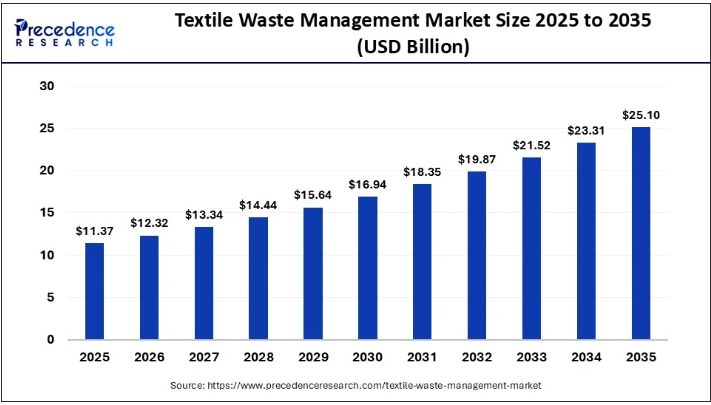
Due to the increasing amount of textile waste, individuals and companies are looking for ways to reduce it. It is predicted that the textile waste management market will reach a value of $25.1 billion by 2035. Businesses and individuals can use this data to determine if textile waste management is worth investing it. Using these statistics, can push others to avoid fast fashion and support the textile waste management market as it is expected to continue growing.
Sample Analysis
How can someone use this data?
Let's say we have Individual A who is interested in opening up a fashion individual. They are wondering whether they should start a fast fashion business or an alternative. All the sources above mention how the fast fashion market is expected to continue growing. Although this industry is flourishing, its impact on the environment can cause harm and setbacks in many ways.
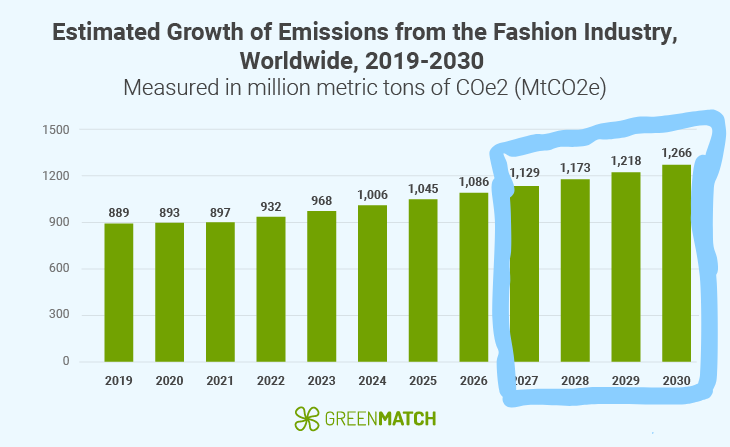
According to the graph on the right, emissions caused by the fashion industry is predicted to continue increaing in the future. This can bring attention to Individual A that fast fashion isn't the best option if they are worried about the environment. This might push them to look at other alternatives that work on textile waste management. Individual A might become curious about the textile waste management industry.
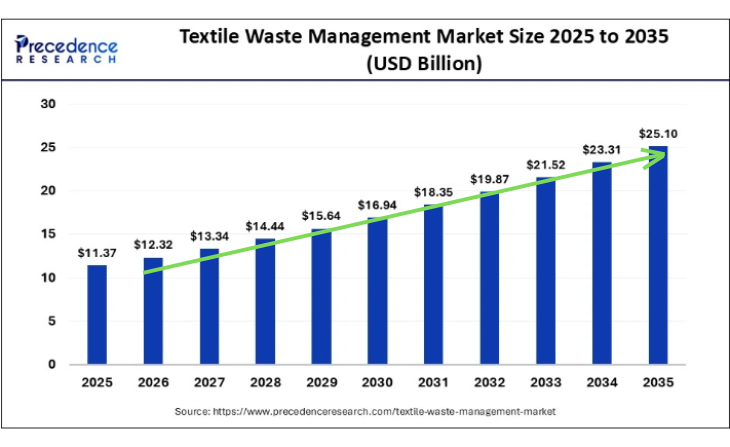
If Individual A were to look at Precedence's data they can see that the textile waste management is growing. This might convince them to start a fashion business that focuses on managing or limiting textile waste. But what type of textile waste management should Individual A focus on?
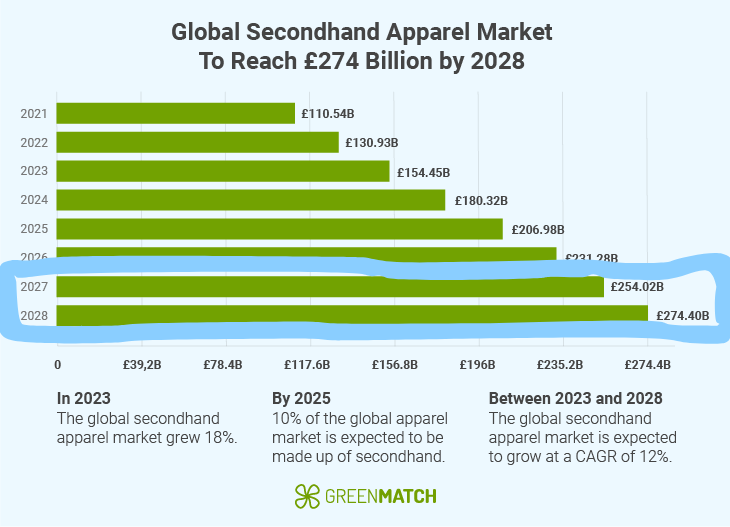
Based on Green Match's data on the second-hand market, we can see an expected future growth in the upcoming years. This data can help Individual A to choose second-hand clothes as their fashion business focus.
Although the fast fashion industry continues to grow in value and can be a profitable business venture, there are other alternatives that are growing in value. For instance, the second-hand clothing market, and with the increasing amount of textile waste, there is plenty to sell. While profit is important for businesses and cheap prices are more attractive for consumers, there should be awareness on the impact of one's consumption and products.